This is the twenty-first post in my Real Trade Series, where I go through actual trades from my own charts and journal notes, wins, losses, and everything in between. This one is a smaller loss than most in this series, but it’s a clean example of a mistake I know I’ve made more than once: seeing a stock already running and jumping in because I didn’t want to miss it, rather than because I’d actually planned the entry.
A general note that applies to this post and several others in this series: the open and close dates and times shown come from when the trade was recorded in my trade journal, not necessarily the exact timing the order was actually placed and filled in the market. There can be a gap between the two, and readers should discount the precise timestamps accordingly rather than treating them as a live, tick-by-tick record of execution.
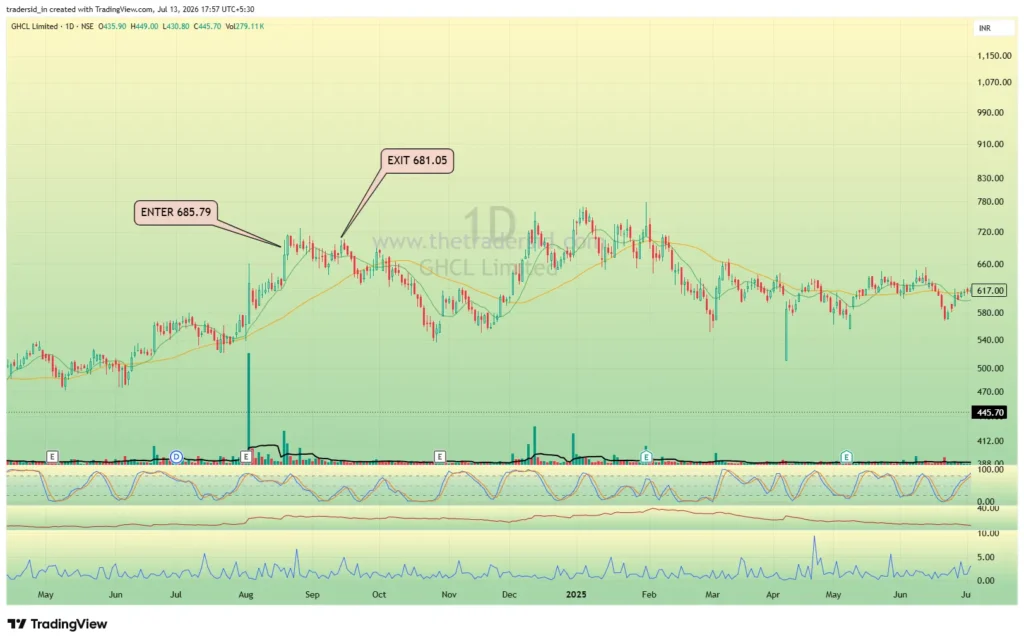
Same note as always on the chart: I didn’t have a saved screenshot from the actual dates of this trade, so the markup here is done on today’s chart, placed at the historical prices and dates from my trade journal.

What I was looking at
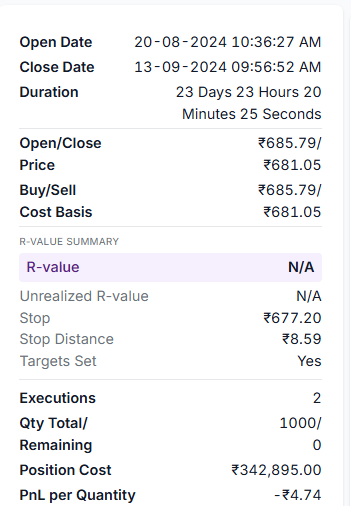
GHCL was moving on 20th August 2024, and by the time I actually clicked buy, the stock was already up 8% for the day. I didn’t wait for it to settle, and I didn’t place a limit order at a level I’d decided on in advance. I bought at the market price, right into a move that was already well underway.
What I actually did
I entered at 685.79 with a stop at 677.20, a tight stop of just over 1% below my entry. I held the position for about 24 days. The stock never came close to hitting that stop, but it also never really went anywhere. I eventually closed it at 681.05, a small loss of 2,370 rupees after a full 24 days in the trade.
Why this one went the way it did
My own notes from that day are honest about what happened. I wrote it down plainly at the time: it was FOMO. I entered at the market price instead of using a limit order, specifically because the stock was already up 8% and I didn’t want to miss the move. I even wrote myself a note asking whether a pullback was likely, a question I flagged but never actually answered before entering.
That question turned out to matter. The stock didn’t crash and take out my stop. It just drifted, going nowhere for over three weeks before I closed it out slightly under my entry price. That’s arguably a worse outcome than a clean stop-out. A stop-out at least tells you the trade was wrong quickly. This one just sat there, capital tied up in a position that wasn’t working and wasn’t clearly failing either.
What was actually missing
I had a stop in place here, which already puts this ahead of a trade like BASF earlier in this series. But having a stop isn’t the same as having a plan. I never worked out where I’d actually want to buy this stock if I’d seen it before the 8% move started. I reacted to strength that was already visible to everyone else in the market by the time I acted on it, and the pullback question I asked myself in my own notes was the right question. I just didn’t wait for the answer before I was already in the trade.
What this trade taught me
Entering at market price after a stock is already up meaningfully for the day means I’m accepting whatever price the crowd has already pushed it to, not a price I’ve actually decided is worth paying. A limit order at a level I’ve planned in advance would have either gotten me a better entry or kept me out of the trade entirely if the stock never came back to that level. Either outcome beats chasing.
The bigger lesson is about the note I left myself and ignored. If I’m asking a real question about the setup, whether a pullback is coming, whether the move is sustainable, that question needs an answer before I enter, not a mental note to check on later. By the time I’m already in the position, the question isn’t useful anymore. It’s just a worry I’m carrying alongside a trade I shouldn’t have taken until I’d resolved it.