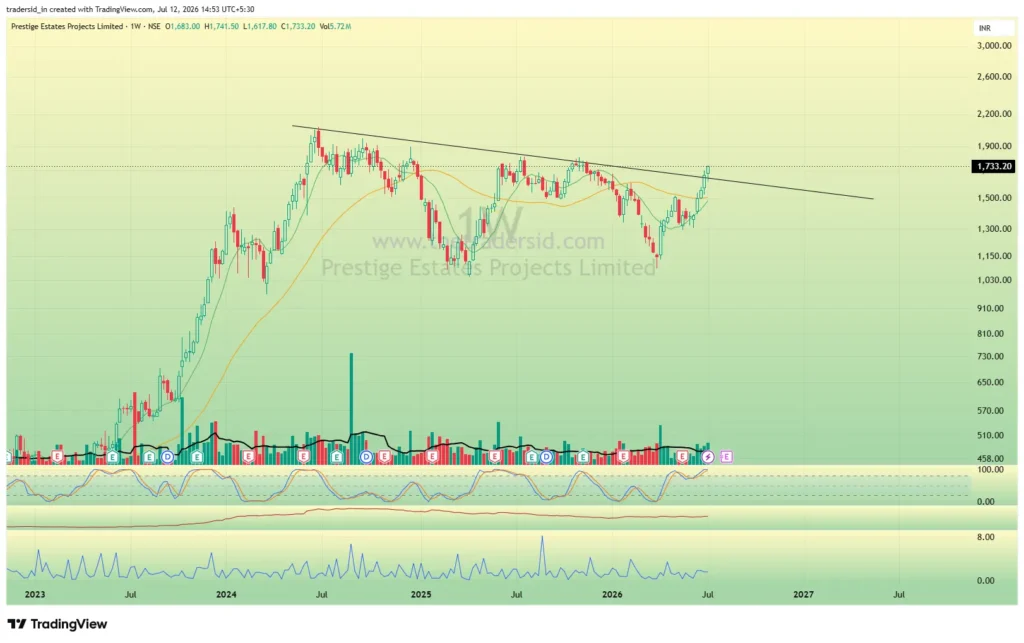
Every swing trader, no matter how they describe their approach, is really doing one of three things. They’re buying a stock as it breaks out into new strength, buying a stock as it pulls back within an existing trend, or buying a stock as it reverses out of a downtrend into a new one. Almost every named pattern or system you’ll come across is a variation of one of these three ideas. Understanding them at this level, before getting lost in specific chart patterns, makes it much easier to know what kind of trade you’re actually taking and why.
Why It Helps to Think in Categories
New traders often study individual patterns in isolation, a flag here, a double bottom there, without realising that these patterns are just different expressions of the same underlying idea. A breakout from a tight base and a breakout from a flag are both breakouts. A pullback to a moving average and a pullback to a trendline are both pullbacks. Once you can categorise a setup as a breakout, pullback, or reversal, you immediately know what conditions need to be true for it to work, and what would invalidate it. That clarity is worth more than memorising twenty pattern names.
Strategy One: Breakout Trading
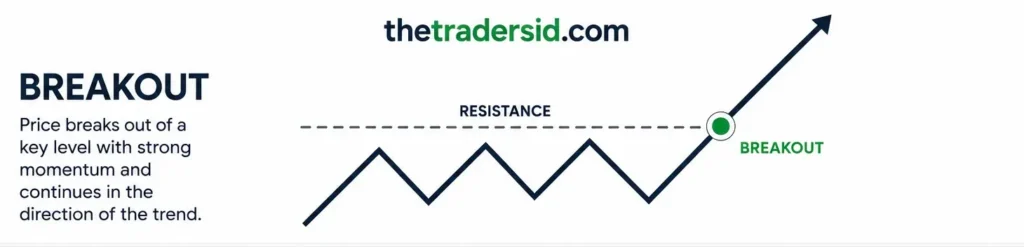
A breakout trade is built on a simple idea: a stock has been building energy in a range or a tight consolidation, and when it finally breaks above that range with strength, it tends to continue in that direction, at least for a while.
The logic behind it. When a stock consolidates, buyers and sellers are in a temporary standoff. Price isn’t going anywhere because neither side has enough conviction to push it decisively. A breakout signals that this standoff has ended, usually because new buying interest has entered with enough force to absorb all the selling at that level. Volume expanding on the breakout day is often treated as confirmation that the move has real participation behind it, not just a temporary spike.
What it looks like. The setup typically involves a period of tightening price action, higher lows moving into a resistance level, or a narrowing range where daily price swings get smaller and smaller. This tightening is often read as a sign that supply is drying up. The breakout itself is the move above that resistance, ideally on above-average volume.
What makes it work or fail. Breakouts work best when the broader trend and the broader market are supportive. A breakout in an individual stock is far more reliable when the sector it belongs to is also showing strength, and the overall market isn’t fighting against it. The common failure mode is the “false breakout,” where price pokes above resistance, draws in buyers, and then falls back into the range. This is why many traders wait for a close above the level, or some follow-through, rather than buying the instant price ticks above resistance.
The trade-off. Breakout trades tend to offer good timing, you’re buying right as momentum is confirmed, but the entry price is often less favourable since you’re buying strength rather than weakness. The risk is usually defined by placing a stop just below the breakout level or the recent base.
Strategy Two: Pullback Trading
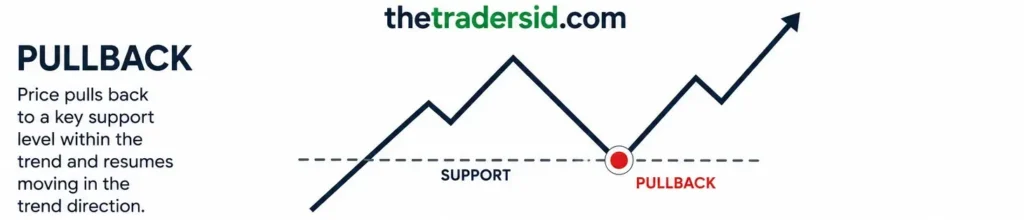 A pullback trade takes the opposite approach. Instead of buying into fresh strength, it involves buying a temporary dip within an existing uptrend, on the idea that the larger trend is still intact and the pullback is simply a pause, not a reversal.
The logic behind it. No stock moves in a straight line. Even strong uptrends involve regular pauses or pullbacks as short-term traders take profits and the stock resets before continuing higher. A pullback trader is betting that the dominant trend, the weekly structure, sector strength, overall demand for the stock, is still in control, and that the pullback offers a better entry price than chasing the stock at new highs.
What it looks like. This usually shows up as a stock retracing toward a moving average, a prior breakout level, or a trendline that has previously acted as support, after having already demonstrated strength in its broader trend. The pullback is often accompanied by lighter volume than the preceding rally, which is read as a sign the move is simply a rest, not distribution by sellers.
What makes it work or fail. The key risk in pullback trading is misjudging where a healthy pullback ends and a genuine trend reversal begins. Not every dip is a buying opportunity. A pullback that breaks meaningfully below prior support, or that comes with a sharp increase in selling volume, is often a sign the trend has actually changed character. This is why pullback traders pay close attention to how price behaves at the support level itself, whether it holds and shows signs of buyers stepping back in, rather than just assuming the dip will be bought.
The trade-off. Pullback trades typically offer a better entry price than breakouts, since you’re buying into weakness rather than strength. But the trade-off is timing risk, a pullback can extend further than expected, or can turn into the start of a real downtrend, so the stop loss placement and patience required are different from a breakout trade.
Strategy Three: Reversal Trading
 A reversal trade is the most difficult of the three conceptually, because it involves buying a stock that has been in a downtrend, on the belief that the downtrend is ending and a new uptrend is beginning.
The logic behind it. Trends don’t last forever. At some point, sellers exhaust themselves, and the balance of power shifts back toward buyers. A reversal trader is trying to catch this shift early, often around a point where a stock has fallen sharply, found a level where selling pressure clearly slows, and begins showing early signs of buyers regaining control.
What it looks like. Classic signs include a sharp decline followed by a sideways basing period, a failed attempt to make a new low, or a stock that starts outperforming its sector and the broader market after a long period of underperformance. Volume often plays a role here too. A capitulation-style sell-off, an extreme volume spike on a final leg down, followed by stabilisation, is one of the more recognised reversal signatures.
What makes it work or fail. Reversal trades carry the highest risk of the three strategies, because you are trading against the prevailing trend rather than with it. The market has a saying for a reason: don’t try to catch a falling knife. Many apparent reversals are simply pauses within a larger downtrend, and price resumes falling shortly after. This is why reversal traders typically wait for actual confirmation, a higher low, a break of a downtrend line, renewed relative strength, rather than trying to guess the exact bottom.
The trade-off. Reversal trades offer the best possible entry price of the three, since you’re buying near the low rather than after a stock has already proven itself. But this comes at the cost of the lowest win rate and the highest uncertainty, since you’re betting on a change in character rather than continuation of something already established.
How the Three Compare
Thought of together, these three strategies sit on a spectrum of timing versus price. Breakout trades offer the most confirmation but the highest entry price. Pullback trades offer a balance, some confirmation from the existing trend, combined with a better entry than chasing strength. Reversal trades offer the best entry price but the least confirmation, which is why they tend to require tighter risk control and a higher tolerance for being wrong.
None of the three is inherently superior. Market conditions matter more than personal preference. Breakouts tend to work best in strong, trending markets where momentum is rewarded. Pullbacks work well in markets that are healthy but choppy, where patience gets rewarded over chasing. Reversals tend to appear more frequently after extended downtrends or sharp sell-offs, when the market itself is due for a change in character.
Bringing It Together
Most swing traders, once they’ve been at it long enough, gravitate toward one or two of these strategies rather than all three, simply because each one requires a slightly different temperament. Breakout trading rewards decisiveness and comfort buying strength. Pullback trading rewards patience and the ability to sit through a dip without panicking. Reversal trading rewards contrarian conviction and strict risk control, since it’s the easiest of the three to get badly wrong.
Rather than asking which strategy is “best,” the more useful question is which one matches the current market environment, and which one matches your own ability to sit with a trade through its natural discomfort. Recognising which of the three you’re actually trading, and why, is what turns a random chart pattern into a repeatable, understandable process.